
THE GROUP
A demogroup built on sharing what it knew
Origins
Logon System was founded in 1988 by Longshot. Its members worked mainly on the Amstrad CPC — Amstrad's 8‑bit micro-computer of the 1980s — with occasional, more anecdotal excursions onto other machines of the era.
Its members have gathered at CPC meetings for over three decades — the Amstrad Expo, Euromeetings, Castle Party, Revision, Crocofest, and plenty of living-room reunions in between. Browse the photo archive →
A culture of sharing
Logon System carried real weight in the small demoscene world of the late 1980s and early 1990s — not only through its productions, but by cultivating a spirit of sharing knowledge around a common passion. That knowledge travelled through letters, meetings, and a specialised, wide‑circulation magazine, Amstrad Cent Pour Cent, which brought the group a certain notoriety in that small circle.
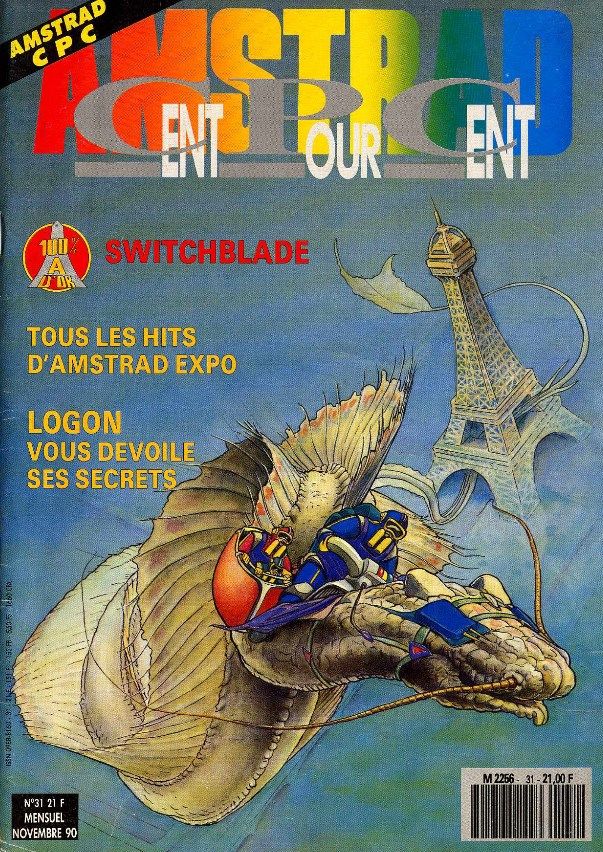
Most of the original members stepped back from the scene after 1993. Years — and a few grey hairs — later, several are still in touch, and new active members keep arriving.
Overflow's return
Overflow, one of the group's members, brilliantly picked the demomaking torch back up in the early 2000s, producing occasional, impressive releases in the purest spirit of the craft: make the viewer's jaw drop with an unusual, pleasing effect that looks impossible — until you know the trick.
The Compendium
Longshot kept working on the CPC in fits and starts, as life allowed, driven by a passion for research. Much of that work stayed in the drawer until 2020, when the Covid pandemic finally created the space to start an old project: writing up a structured document distilling everything learned, cross‑checked against thousands of test programs.
The result — the Compendium — was published in late 2021, alongside a revised version of a 1990s demo, The Amazing Demo, fixed for display‑compatibility issues and given a new intro built on previously unpublished techniques. Along the way, Longshot built a series of Proof of Concept (POC) programs — small demonstrations of feasibility in the professional‑software sense, but also just an excuse to build fun, novel little things.
In 2022, Longshot connected with DManu78, author of the Amspirit emulator. The two began working in synergy, and the collaboration pushed the Compendium further than Longshot had hoped. Its latest public release, version 1.11, shipped in August 2026.
New blood
More CPC‑minded people have since joined the group. Siko worked closely with DManu78 to ship Amspirit Lite in June 2026 — the emulator is now available on macOS and Linux, with a Raspberry Pi build on the way (releases on GitHub).
The group also built a portal to showcase the results of the Compendium's test programs, letting any emulator author test their own work and compare it against real hardware. Two data formats were created and released to support automated regression testing: CSL (CPC Script Language) and SSM (Screenshot Management).
Candy, who produced some beautiful demos in the past, has also joined the group — bringing new blood, so to speak.
The blog
In 2024, Longshot added a blog to the Logon ecosystem, a place to speak without being diluted by social‑media noise. It became necessary: for more than a decade, a small group within the French CPC community has, at no benefit to themselves, spread inaccurate or misleading claims about Longshot's work — across their own productions, social media, portals, fanzines, and even a book — usually aiming to minimise or deny that work, and sometimes to misrepresent it outright. The blog is where the record gets set straight, alongside plenty of other, more interesting subjects. On the more constructive side, it also serves as a real, contextualised, gossip‑free counterpoint to a book that claims to document the origins of the CPC demoscene — and a place to answer technical‑authority arguments that don't hold up.
AYT — chiptunes, reinvented
In 2025, Logon System teamed up with Tronic on a new chiptune data format built for the fastest possible playback and the widest possible accessibility. More than 100,000 tunes have already been converted into the format, sourced from a wide range of platforms — and, where feasible, even ported across from other sound chips entirely.